Supervisors: Phil Parkes, Dr. David Watkinson, Jane Henderson, Dr. Eric Nordgren
Program:
Professional Conservation
Date:
Sept. 2023-Sept. 2024
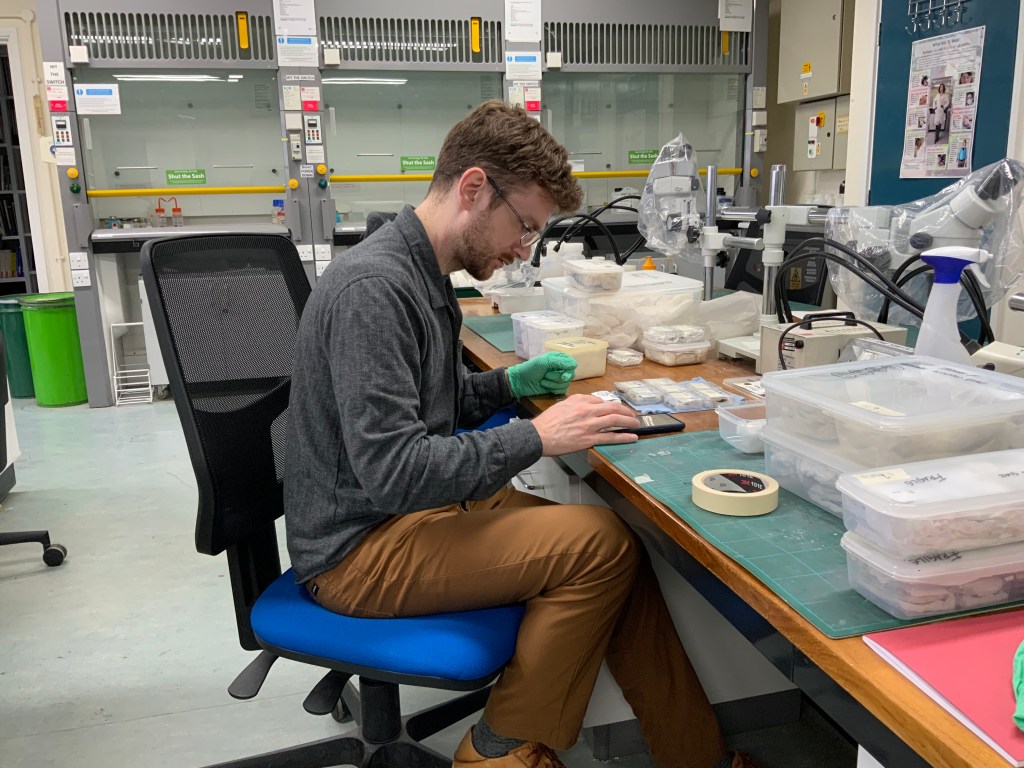
Left: Carrying out a survey with a custom online form (photo credit: Hannah Willet).
Treatments:
During my program in Professional Conservation at Cardiff University, I have worked on projects and treatments including a collection of over 287 pieces of archaeological glass, a Roman coin, glass butter churn, and an Egyptian coffin.
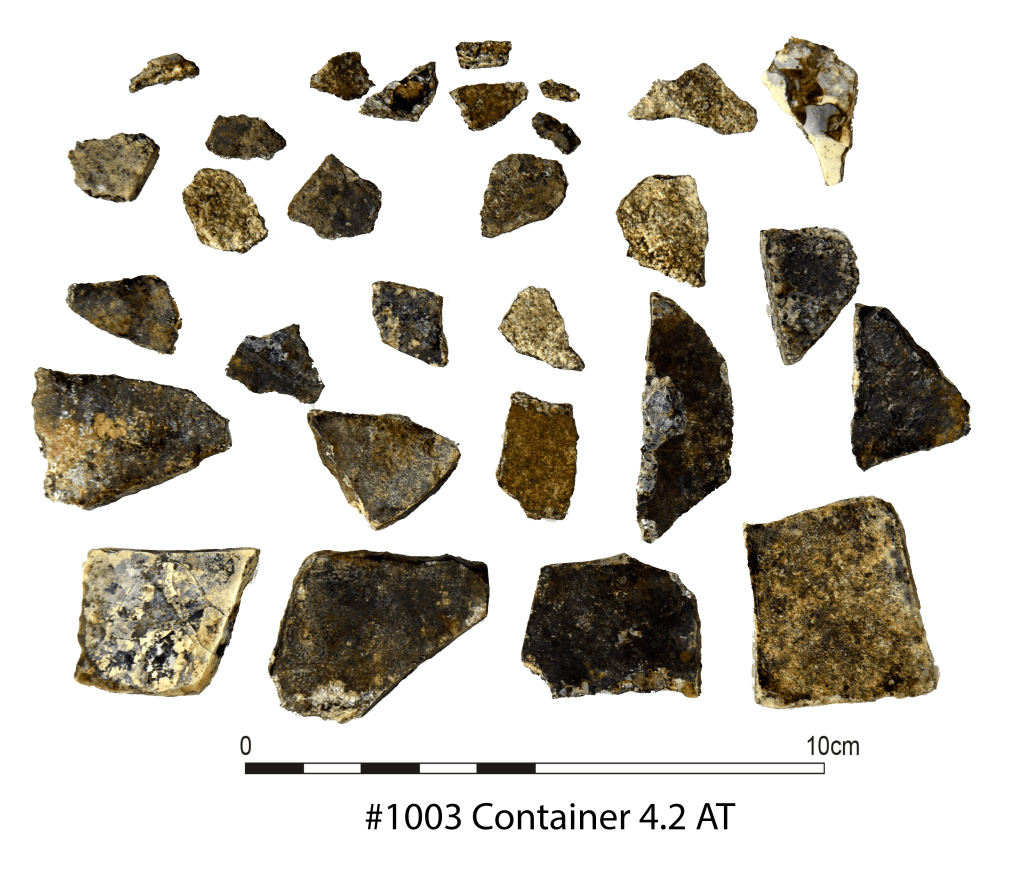
Object: Archeological Glass
Location: Strata Florida Friary.
Treatment: Glass was cleaned in deionized water and industrial methylated spirits (IMS) using a brush, with light abrasion action to help facilitate dirt removal.
Wet-stored pieces were cleaned with deionized water, dried pieces were cleaned with IMS.
Wet-stored pieces were then dehydrated with increasing concentrations of IMS in deionized water: 25%, 50%, 75%, and 100%. The pieces were placed in these solutions for 24 hours each.
Once dehydrated in 100% IMS for 24 hours, the pieces were consolidated by placing in a solution of 10% Paraloid B72 (ethyl methacrylate and methyl acrylate copolymer) in acetone. During consolidation, the pieces were placed in a vacuum chamber for 30-60 minutes, then removed, excess consolidant was removed by dipping in a solution of 70% acetone and 30% IMS, drying on blue roll, then laid on silicone-release paper to dry.
The cleaned, dried, and consolidated pieces were then repackaged in their polycarbonate containers between 2 layers of acid-free tissue, with polyester batting as cushion.
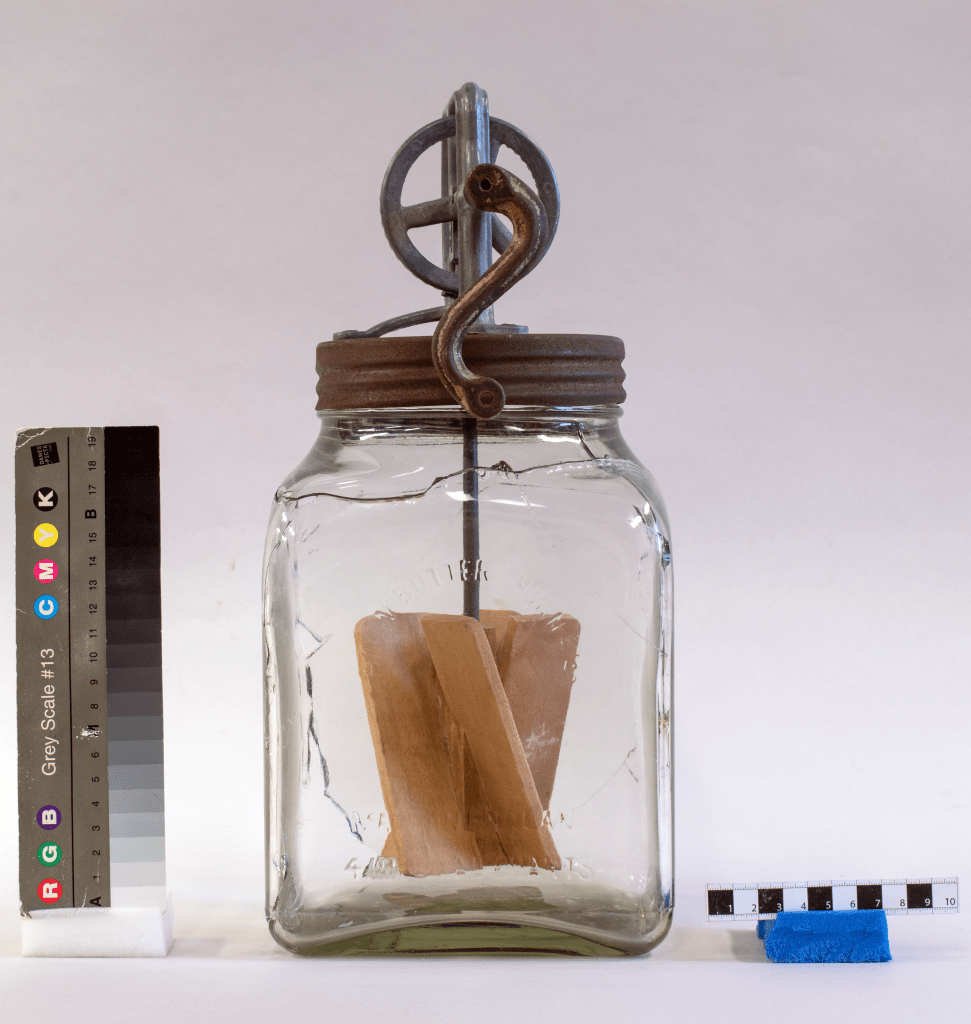
Object: Butter Churn
Location: Rhondda Heritage Park
Treatment: The glass pieces were reassembled with Hxtal and Araldite 2020, and excess corrosion removed from the lid and handle components.
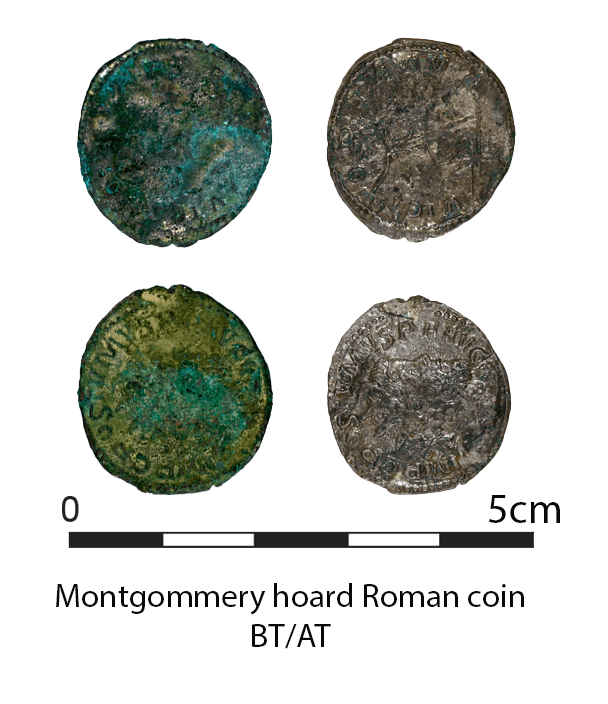
Object: Roman Coin
Location: Montgomery Hoard
Treatment: The coin was submerged in Rochelle salts for 10 minutes, removed, and cleaned by hand with brushes and a scalpel. This process was repeated until the surface was mostly clear of corrosion and surface deposits.
Then the coin was rinsed with water twice and dried in IMS.
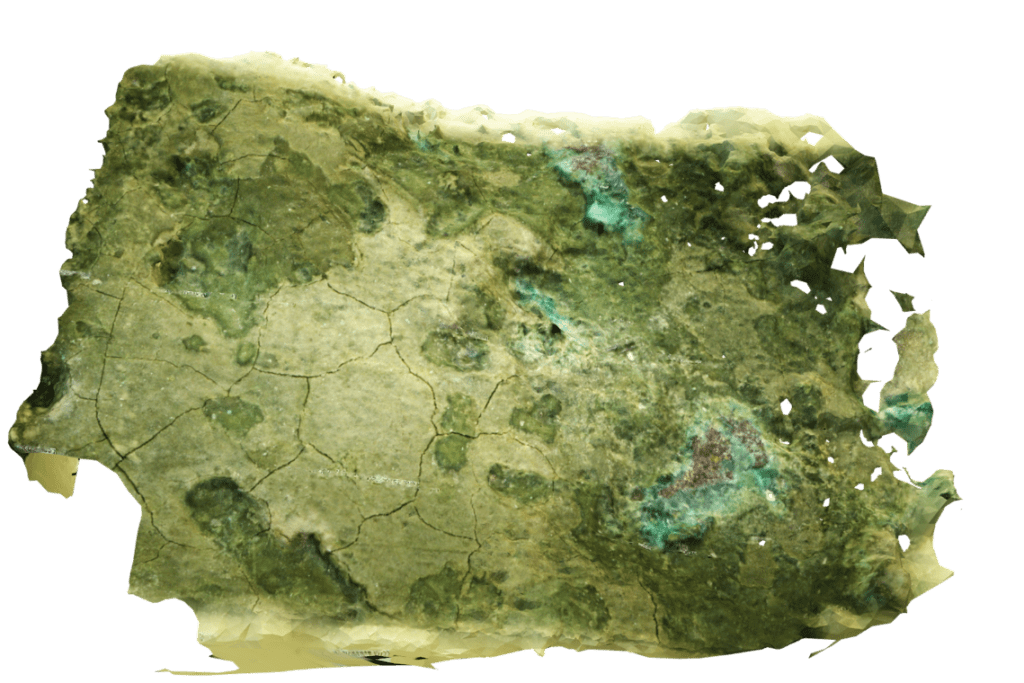
Below: This coin was also part of a feasibility study on using the Keyence digital microscope for microscale photogrammetry. The image below is the 3D model of a 1x2mm section at 300x.
Object: Egyptian coffin
Location: Egypt Centre, Swansea University
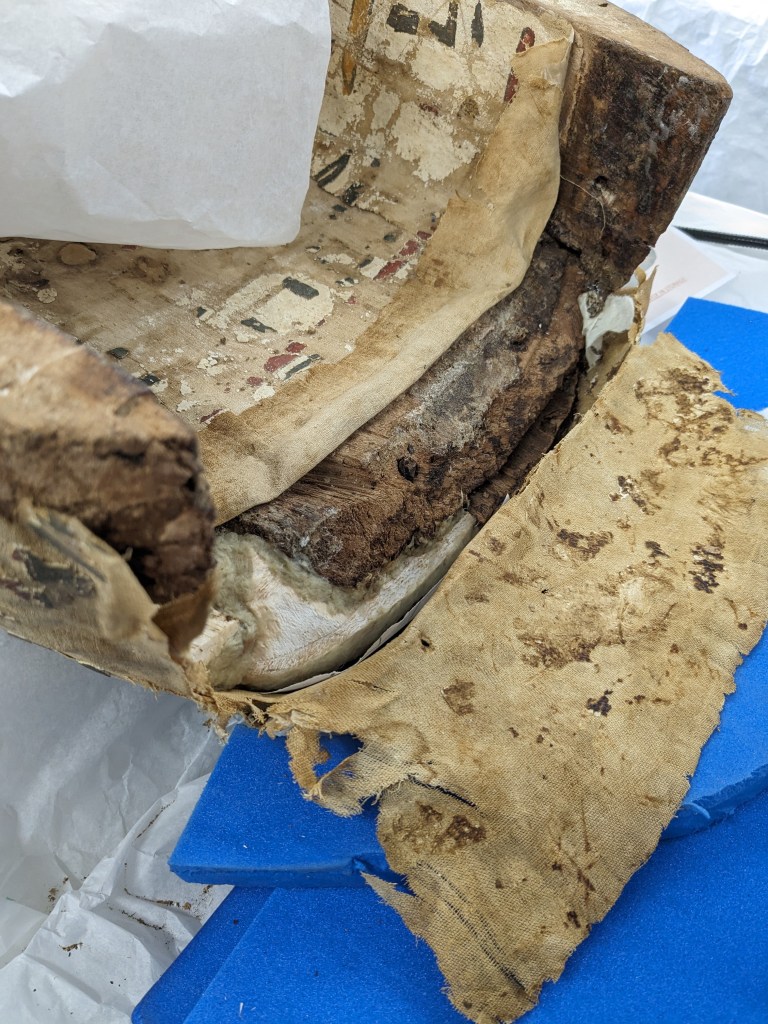
Treatment: In addition to contributing to the cleaning of the coffin, I made a custom fill for a section of loss.
I took measurements with calipers and made a paper sketch of the different profiles, then made a mockup from plastazote.
Once the plastazote mockup was trimmed and verified to fit, I transferred the profiles onto a piece of balsa wood and carved the fill. Then I set the fill with a mixture of Japanese paper pulp and Klucel G adhesive.
 Sean T Portfolio and projects